What Procurement Teams Look for in Hospitality Carpet Specifications 2027
What hospitality carpet has to clear in 2027 — the fire/cert pack by region and area, realistic lead times, and operator brand standards — and how to get it specified right without wading through catalogues.
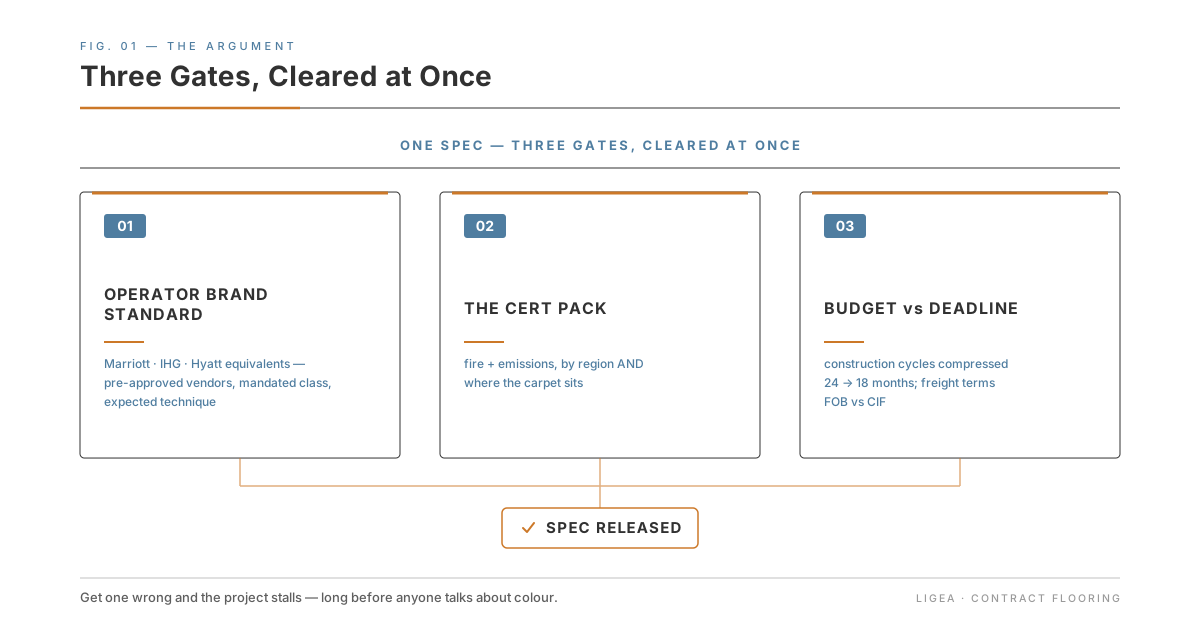
If you are specifying carpet for a hotel, resort or branded residence, you are clearing three gates at once: the operator's brand standard, the fire and emissions pack for the region and the area, and the budget against a deadline that keeps tightening. Get one wrong and the whole project stalls — long before anyone talks about colour.
The frustrating part is that none of this is really design work. It is compliance, logistics and budget reconciliation. This guide lays out what each gate actually requires in 2026–2027 — and where it makes sense to stop doing it yourself.
01The Cert Pack — What Your Area Actually Requires
Fire and emissions certificates are the first gate. A missing one removes a product from the table before design enters the room. What you need depends on the region and on where the carpet sits — and the most common mistake is treating one cert as if it covers everything.
US projects run on two different fire tests, and the difference matters more than people think:
- The pill test (ASTM D2859, the consensus-standard equivalent of the CPSC FF 1-70 / FF 2-70 methenamine test): a methenamine tablet is ignited on the carpet surface. In the US it is the mandatory baseline — every large carpet (one dimension > 6 ft and area > 24 sq ft) must pass it, no exemption. Small carpets and rugs (≤ 24 sq ft, under FF 2-70) are tested the same way; the only relief is that a small rug which fails may still be sold if permanently labelled flammable. So the area-rug leniency is narrow — wall-to-wall has no such escape.
- The radiant panel test (ASTM E648, technically equivalent to NFPA 253): the strict one. Building codes (IBC 804 / NFPA 101) require it for installed floor coverings in corridors and exit routes — Class I (≥ 0.45 W/cm²) in the highest-risk locations, Class II (≥ 0.22) elsewhere. This, not the pill test, is what a US hotel corridor spec actually hinges on.
EU / EEA projects classify to EN 13501-1 — derived chiefly from EN ISO 9239-1 (radiant panel) together with EN ISO 11925-2 (ignitability) — with EN 14041 CE marking. National building codes (not EN 13501-1 itself) set the required class by location: the minimum for hotel public areas, corridors and escape routes is typically Cfl-s1, while the stricter Bfl-s1 sits one class above and is specified for elevated-risk settings such as high-rises, hospitals and transport hubs. The driver is the escape and circulation route — not "guestroom versus public area." One nuance: CE marking under EN 14041 covers fitted floor coverings; loose-laid rugs fall outside its scope, though they're often specified to the same class anyway.
Japan is the reminder that the cert pack is country-specific, not just continent-specific. Many Japanese buildings — high-rise towers, underground malls, hospitals, theatres and other public-assembly venues — fall under the Fire Service Act, which requires their carpets, curtains and other soft furnishings to be flameproof (防炎, bōen) articles tested to JIS L 1091. Compliance is not proven by a test report alone: the carpet has to carry a registered flameproof label, issued through the Japan Fire Retardant Association and affixed only by a JFRA-registered labelling business — that physical label is what a fire inspector checks. In practice, specifiers often find the registration runs per project: a sample length of the actual carpet is produced and tested, and only then are the flameproof labels issued and applied to the delivered goods. A clean example of why the cert pack has to be rebuilt for each destination country, not carried over from the last project.
Marine and cruise is its own world: the IMO 2010 FTP Code (Parts 2 and 5) for SOLAS vessels. A hotel cert pack does not cover it.
Sustainability is now expected rather than optional — and, like fire, the framework is regional. There is no "green certificate" for a carpet itself; it contributes to the building's rating. For US / international LEED projects, carpet earns the LEED v4.1 Low-Emitting Materials credit via the CDPH Standard Method (California's VOC-emissions protocol) — FloorScore, GREENGUARD Gold and CRI Green Label Plus all satisfy it, and ≥ 90% of flooring (by cost or area) must comply. In Europe, the systems are BREEAM, DGNB and HQE, and the relevant product labels are the French A+ VOC class, AgBB, EMICODE EC1, the carpet-specific GUT label and Eurofins Indoor Air Comfort Gold (with M1 in the Nordics). Several satisfy LEED and BREEAM at once.
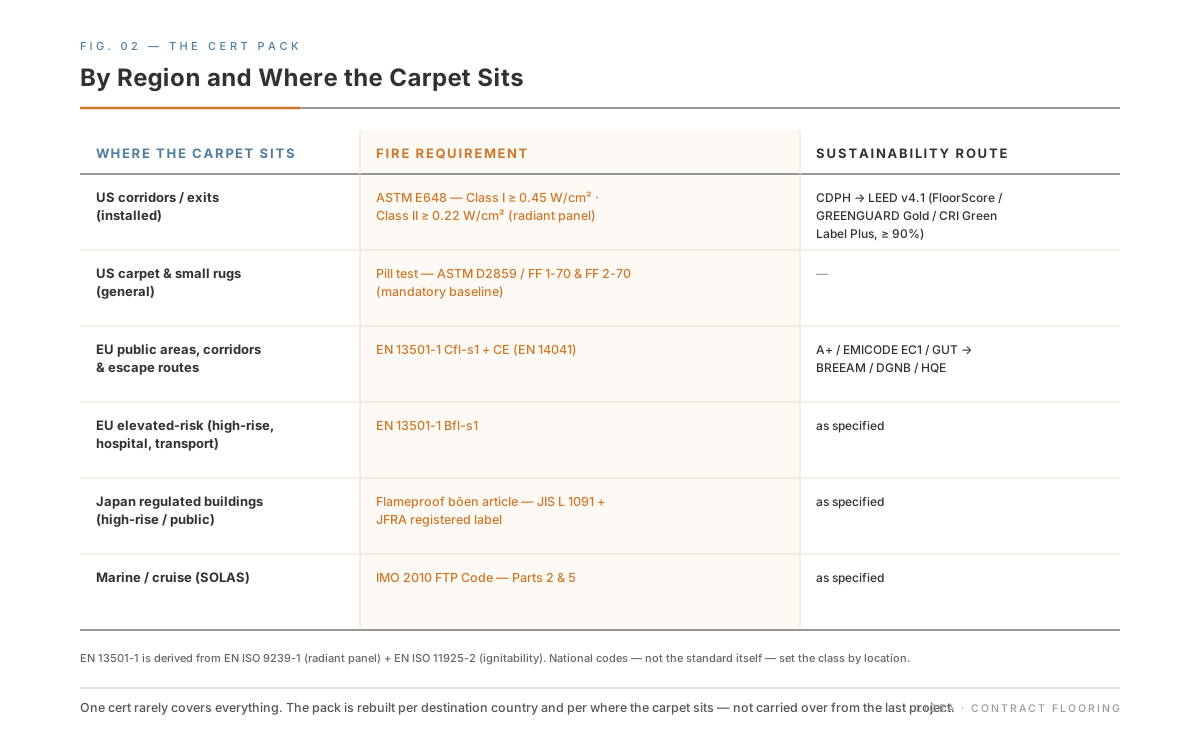
A quick way to hold it together — by where the carpet sits:
| Where the carpet sits | Fire requirement | Sustainability route |
|---|---|---|
| US corridors / exits (installed) | ASTM E648 Class I or II (radiant panel) | CDPH → LEED (FloorScore / GREENGUARD Gold) |
| US carpet & small rugs (general) | Pill test (ASTM D2859 / FF 1-70 & FF 2-70) | — |
| EU public areas, corridors & escape routes | EN 13501-1 Cfl-s1 + CE (EN 14041) | A+ / EMICODE EC1 / GUT → BREEAM / DGNB |
| EU elevated-risk (high-rise, hospital, transport) | EN 13501-1 Bfl-s1 | as specified |
| Japan regulated buildings (high-rise / public) | Flameproof bōen article (JIS L 1091) + registered label | as specified |
| Marine / cruise | IMO 2010 FTP Code (Parts 2 & 5) | as specified |
02Lead Time Is a Deadline, Not a Detail
Construction cycles have compressed — a development that ran 24 months in 2018 often runs 18 in 2026 — and flooring is one of the last trades in. So lead time reads as schedule risk, not convenience: a slipped opening costs more per day than the carpet costs in total.
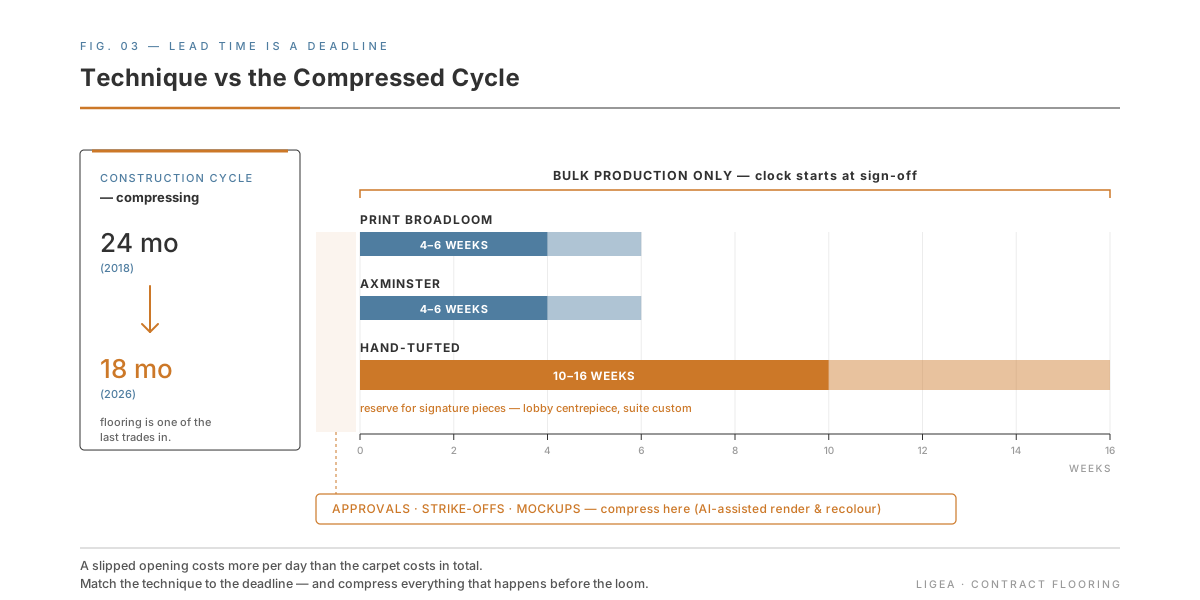
Indicative production time, depending on volume and finish:
- Print broadloom — 2–4 weeks
- Axminster — 3–8 weeks
- Hand-tufted — 10–16 weeks, and correctly reserved for signature pieces (a lobby centrepiece, a suite custom), not standard floor area
Read these as bulk-production times only — the clock starts once design, colours, strike-offs and mockups are signed off. The approval rounds before that are real, and they are where schedules quietly slip. They are also where the biggest gains hide: AI-assisted rendering and recolouring lets a designer see a corridor or suite in its final scheme and iterate in hours, not physical-sample cycles — so sign-off lands sooner and the production clock starts earlier.
The real lever, then, is two-fold: match the technique to the deadline rather than forcing one technique onto every brief, and compress everything that happens before the loom. Get both right and the schedule stops being a risk line in the spec.
03The Operator Brand Standard Sits Above All of It
Above the cert pack sits the operator's brand standard — the Marriott Design Standards, the IHG Way of Design, Hyatt Brand Standards and their equivalents. These documents pre-approve the vendors and define the fire class, the sustainability markers and the aesthetic the brand expects, often before a designer opens a sample box. Specifying to a generic spec — or to the wrong operator standard — is where otherwise good projects stall.
The practical move is to map the spec to the specific operator standard in the brief from the start: the required fire class, the sustainability markers that brand mandates, the technique it expects. That mapping is hard to assemble once a tender is already live.
04Where Carpet Specs Quietly Go Wrong
A few things end a spec without much feedback:
- Single-technique thinking — forcing axminster onto a brief that wants print economics, or print onto a brand standard that expects axminster.
- No reference in the same operator brand family. Pattern beats promise.
- Freight terms — FOB pricing on an international project where CIF to the destination port is expected.
- Custom-colour lead times the schedule can't absorb.
None of these are quality problems. They are fit-and-risk problems — and they are the ones that derail a spec before the carpet itself is ever judged.
05The Shortcut: One Partner Who Holds All Three
Here is the honest part. A designer or an owner's rep should not have to master fire codes across three continents, track every operator's brand standard, and reconcile all of it against a budget — while wading through manufacturer catalogues to find something that fits. That is the work, and it is exactly the work that should sit with a partner.
This is what ligea does: we hold the three together. We read the designer's vision, we know the certification landscape, and we work to the developer's budget — then develop exactly the carpet the project needs, from one hand. No catalogue archaeology, no cert guesswork, no five suppliers to coordinate. One reliable partner, brief to delivery, across print, axminster, hand-tufted and braided, matched per project to the right technique and producer.
That is the difference between specifying carpet and having carpet specified for you.
06The Short Version
Specifying hospitality carpet means clearing three gates at once — the operator's brand standard, the cert pack for the region and where the carpet sits, and the budget against a tightening deadline. You can map all of it yourself, or hand it to a partner who already holds the three together. Either way: get the gates right, and the design — the part that should be the rewarding part — is the conversation you actually get to have.
---
ligea engineers contract surfaces for hospitality projects worldwide — print, axminster, hand-tufted and braided, matched per brief to the right technique, certification and budget. If you're working a live spec, see our surfaces or book a 15-minute spec call.